Maximum Subsidy Rates for Aquaculture Feed Approved

In accordance with the Rules for Subsidizing the Increase in Productivity and Quality of Aquaculture Products, as well as the Development of Breeding Fish Farming (approved by Order No. 412 of the Ministry of Agriculture of the Republic of Kazakhstan, dated November 1, 2025), the maximum allowable subsidy amounts for aquaculture feed have been established.

According to the Rules, the maximum subsidy amount per 1 kilogram of feed is as follows:

-Salmonids and their hybrids — up to 330 tenge;

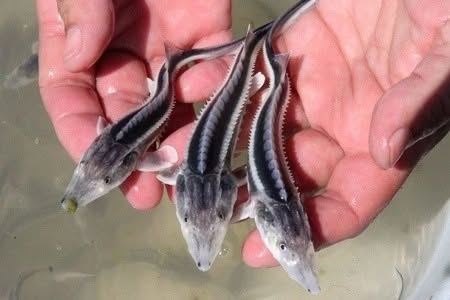
-Sturgeons and their hybrids — up to 330 tenge;

-Cyprinids (Carp family) and their hybrids:

  • Granulated feed — up to 105 tenge;
  • Extruded feed — up to 250 tenge;

-Catfish and their hybrids — up to 210 tenge;

-Cichlids and their hybrids — up to 210 tenge;

-Latidae (Lates perches) and their hybrids — up to 210 tenge;

-Arowanas and their hybrids — up to 285 tenge;

-Crustaceans — up to 228 tenge.


These adopted standards are aimed at reducing the costs for fish farms, encouraging the use of modern specialized feeds, and increasing the competitiveness of domestic aquaculture products.

The implementation of these state support measures will ensure the sustainable development of the industry, increase production volumes, and improve the overall quality of products.


Seminar on “Modern Methods of Hydrochemical Research”

On February 26, 2026, staff members of the Hydroanalytical Laboratory at the main division of the Fisheries Science and Production Center (FSPC) organized an open house day for 2nd and 3rd-year students of the Kazakh National Agrarian Research University. A scientific and informational seminar was held offline for the participants on the topic: “Modern Methods of Hydrochemical Research.”

Seminar Organizers:

  • Dolgopolova S.Yu. – Head of the Hydroanalytical Laboratory;
  • Mukatai A.A. – Research Fellow;
  • Bekturov D.S. – Research Fellow.

The goal of the seminar was to introduce the scientific activities of our center and demonstrate the theoretical and practical research methods used in the hydroanalytical laboratory.

Key topics of the seminar included:

  • Methods for conducting hydrochemical research in both field and laboratory settings;
  • A practical session featuring laboratory analysis using titrimetric and spectrophotometric methods.

Following the seminar, participants engaged in a Q&A session and a discussion. The students gained basic skills in hydrochemical laboratory research and expressed strong interest in further collaboration.

State Support for Fish Farming

For the attention of entrepreneurs in the fish farming industry:

In 2026, 1.9 billion tenge has been allocated from the local budget to subsidize improvements in aquaculture productivity and product quality, as well as the development of pedigree fish farming. Additionally, 3.4 billion tenge has been earmarked through general transfers to subsidize the reimbursement of part of the costs incurred during investment projects.

Furthermore, 1.0 billion tenge is provided this year via general transfers to subsidize interest rates for loans to agribusiness entities and for the leasing of machinery and equipment.

Consequently, substantial state support is currently available for entities operating in the fisheries and aquaculture sectors.

Ongoing Winter Research Activities at the Kapshagay Reservoir

In accordance with Order No. 8-K of “Fisheries Scientific and Production Center” LLP dated February 6, 2026, an expedition team has been conducting comprehensive winter research at the Kapshagay Reservoir from February 10 to the present. The team consists of Laboratory Head E.T. Sansyzbayev, Expedition Leader S.Zh. Makambetov, Researchers B.S. Pangereyev and D.S. Bekturov, Administrative Manager E.Zh. Kosherbayev, and Laboratory Assistant N.K. Sakharin. These activities are carried out under Program 021 (Subprogram 100).

Sh.S. Sovetkhan, Chief Specialist of the Kapshagay Fishery Inspection Department of the Balkhash-Alakol Interregional Basin Fishery Inspection (BAIBFI), is participating in the research activities at the Kapshagay Reservoir.

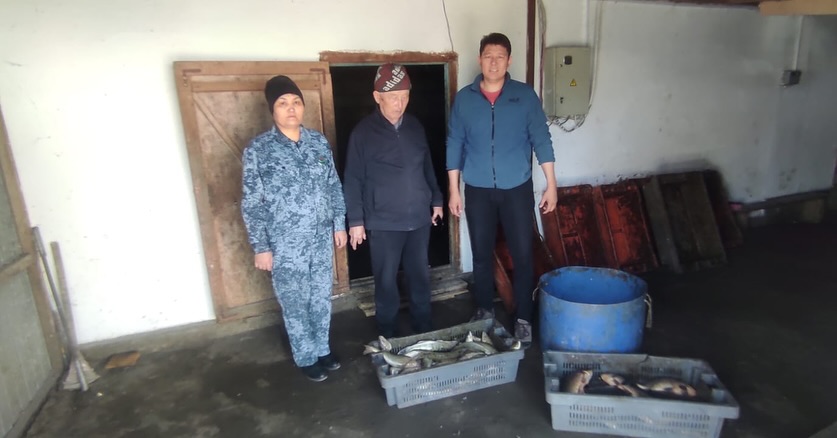
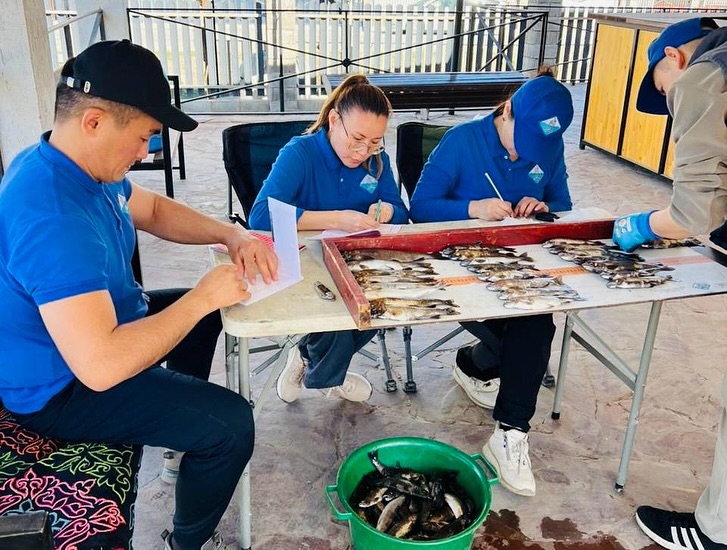
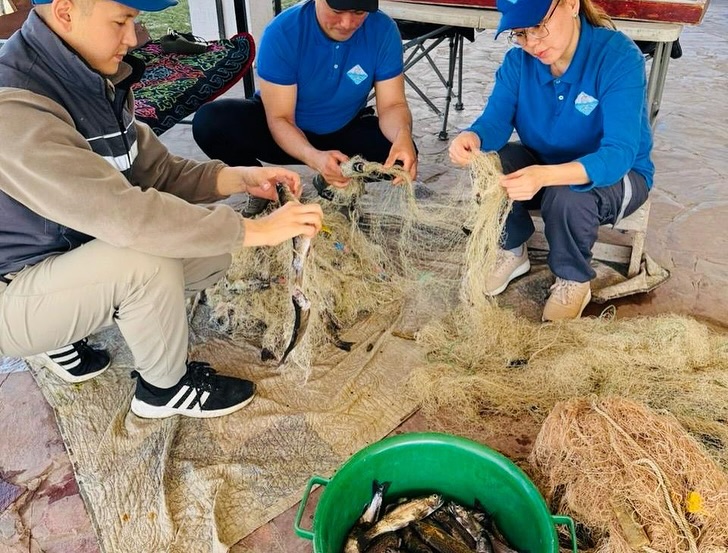
During the field mission, ichthyological, hydrobiological, and hydrochemical samples and materials are being collected at established monitoring stations. Additionally, the team is utilizing echo-sounding to monitor fish wintering grounds and performing analysis and oversight of commercial fishing nets and activities.

These comprehensive research activities will continue until February 23, 2026.

Successful PhD Dissertation Defense

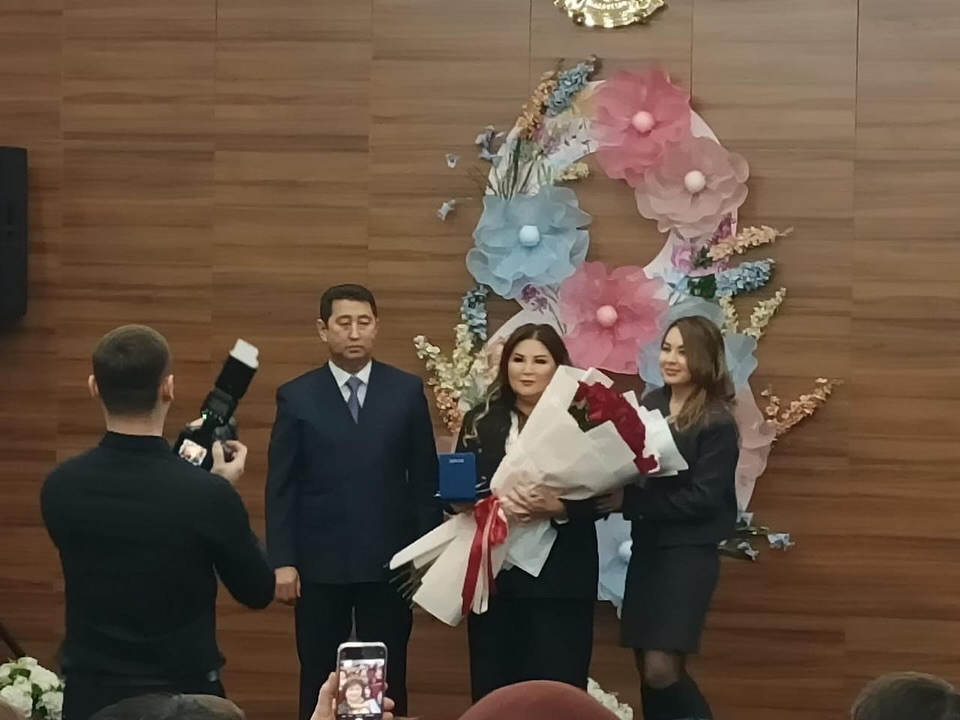
The staff of the “Fisheries Scientific and Production Center” LLP extends its heartiest congratulations to Asylan Mukhambetovich Tuleuov, Senior Researcher of the West Kazakhstan branch, on the successful defense of his dissertation for the degree of Doctor of Philosophy (PhD).

The dissertation, titled “Veterinary and Sanitary Assessment of the Quality and Food Safety of the Narrow-Clawed Crayfish in Water Bodies of the West Kazakhstan Region,” was defended under the specialty 6D120200 — Veterinary Sanitation.

The research work was conducted at the Integrated Fisheries Laboratory of the West Kazakhstan branch of the “Fisheries Scientific and Production Center” LLP, as well as the Laboratory of Ichthyology and Aquaculture at the Institute of Veterinary Medicine and Agrotechnology of the Zhangir Khan West Kazakhstan Agrarian-Technical University.


Research Activities in the Alakol Lake System

Since February 10, 2026, staff members of the LLP “Fisheries Scientific and Production Center” — including Expedition Team Leader  Karlybaiuly S., Researcher Igilik R. , Junior Researchers Otegen S. and Maratuly K., and Laboratory Assistant Abishev N. — have been conducting comprehensive winter research in the waters of the Alakol Lake System (ALS). These activities are being carried out within the framework of Program 021 (Subprogram 100) and Program-Targeted Funding (PTF).

Kulenova Sh.B., Chief Specialist of the Alakol Fishery Inspection Department of the Balkhash-Alakol Interregional Basin Fishery Inspection (BAIBFI), is participating in the research activities across the lakes of the system (Alakol, Koshkarkol, and Sasykkol).

During the field mission, the team is collecting ichthyological, hydrobiological, and hydrochemical samples at monitoring stations. Additionally, they are conducting echo-sounding monitoring of fish wintering grounds, monitoring commercial fishing activities, and analyzing catch data.

These comprehensive studies will continue until March 6, 2026.

Financial Support for the Aquaculture Sector in Kazakhstan

     As part of the implementation of the Law “On Aquaculture,” amendments have been made to the Rules for Lending to Projects in the Agro-Industrial Complex (Order of the Ministry of Agriculture of the Republic of Kazakhstan No. 322, dated August 31, 2023).Budget lending is now provided at a 2.5% annual interest rate for projects involving the establishment of new farms or the expansion of existing ones engaged in aquaculture cultivation with a production capacity of at least 25 tons per year.
     This measure is designed to stimulate the development of aquaculture, enhance the industry’s investment attractiveness, and increase the volume of domestic fish production. Preferential financing creates additional opportunities for entrepreneurs interested in implementing fisheries projects and contributing to the sustainable development of the country’s agro-industrial complex.
For more details: Order of the Minister of Agriculture of the Republic of Kazakhstan No. 322 dated August 31, 2023, “On Approval of the Rules for Lending to Projects in the Agro-Industrial Complex”

Winter Fisheries Research in the Zhambyl Region

Since February 10, 2026, a team from the “Fisheries Scientific and Production Center” LLP—led by Expedition Chief Zh. M. Bakkozha, alongside researchers D. S. Bekturov and A. T. Khalelov—has been conducting comprehensive winter research on local water bodies in the Zhambyl region. These activities are being carried out under Program 021 (Subprogram 100). The primary goal is to assess the state of commercial stocks and determine the distribution of fish and other aquatic biological resources across the local waters of the Zhambyl region.

The expedition team is currently performing integrated hydrochemical, hydrobiological, and ichthyological studies, including:

  • Physico-geographical and hydrological profiling of the water bodies;
  • Analysis of the hydrochemical regime;

  • Assessment of the forage base (food supply) status;

  • Identification of fish species composition within the regional waters.