Astana Hosts Kazakh Fish Academy Practical Course on Fish Health and Disease Management

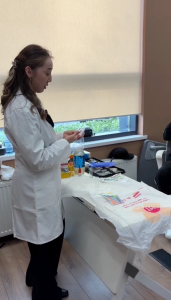
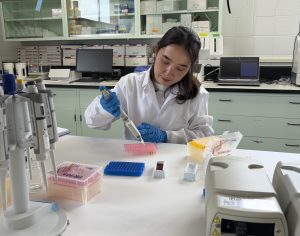
On September 24, 2026, a practical training course for aquaculture professionals was held in Astana, focusing on the diagnosis, prevention, and treatment of fish diseases.

The course, entitled “Fish Health as the Foundation of Sustainable Aquaculture: Diseases, Risks and Solutions,” was conducted for participants of the Kazakh Fish Academy by Zhansulu Urgenishbayeva, Researcher at the Laboratory of Genetics and Aquatic Organisms of the  LLP «Fisheries Research and Production Center»

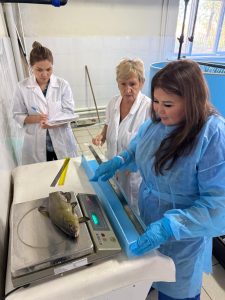
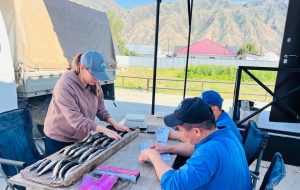
During the course, participants studied the main causes and signs of fish diseases, as well as modern approaches to diagnosis, treatment, and prevention. Particular attention was given to practical training: participants performed external examinations and fish necropsies, assessed the condition of internal organs, practiced biological sample collection methods, and conducted microscopic examinations.

The practical format enabled participants to reinforce their theoretical knowledge and acquire skills necessary for the timely detection of fish diseases, contributing to improved professional training and the development of a culture of disease prevention in aquaculture.

Developing practical competencies in ichthyopathology and biosecurity is an important part of training specialists who are able to respond effectively to fish health risks and contribute to the sustainable development of the aquaculture sector.

A Scientific Council Meeting on the Results of Research Activities Was Held

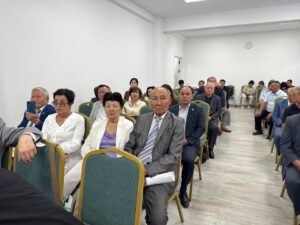
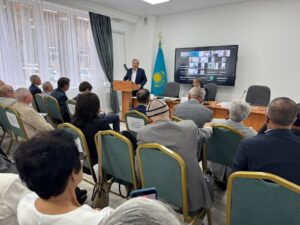
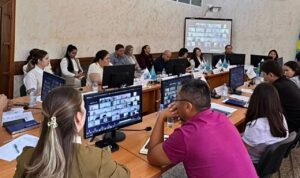
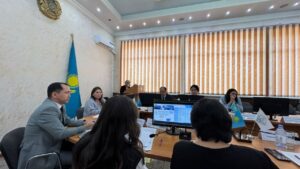
A meeting of the Scientific/Coordination Council was held at the headquarters of the Research and Production Center of Fisheries (RPCF). Leading scientists and industry experts reviewed reports on research activities for 2026 and summarized the results of the implementation of three-year programs for 2024–2026.

The meeting was held in a hybrid format, bringing together participants in the Center’s conference hall and online.

The agenda included the review of the results of two research programs:

─ “Development and Implementation of Innovative Technologies and New Aquaculture Species That Are Economically Efficient Under the Natural and Climatic Conditions of Various Regions of Kazakhstan,” Program Manager: S. Zh. Assylbekova, Doctor of Biological Sciences, Professor, Academician of KAAS;

─ “Comprehensive Studies of Water Bodies for the Conservation and Sustainable Use of Aquatic Biological Resources Based on the Assessment of Their Potential and Modeling of Stock Dynamics,” Program Manager: K. B. Isbekov, Doctor of Biological Sciences, Professor, Academician of KAAS.

Representatives of the relevant government body — the Fisheries Committee of the Ministry of Agriculture of the Republic of Kazakhstan — took part in the Council’s work: M. K. Kalmuratov, Head of the Department for the Protection of Fish Resources and Fisheries Regulation, and B. U. Rustemov, Head of the Aquaculture Development Department.

The heads and specialists of the RPCF branches, as well as representatives of leading scientific organizations participating as co-executors, joined the discussion of the research results remotely:

  • NJSC “S. Seifullin Kazakh Agrotechnical Research University”;
  • LLP “Kazakh Scientific Research Veterinary Institute”;
  • Institution “Institute of Hydrobiology and Ecology”;
  • LLP “Scientific and Production Center of Microbiology and Virology”;
  • LLP “Company for System Research ‘Factor’.”

Employees of the Research and Production Center of Fisheries Elected Corresponding Members of the Kazakh Academy of Agricultural Sciences

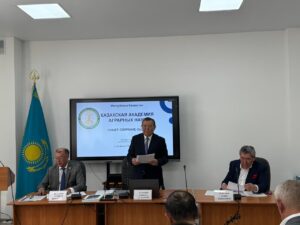
On September 18, 2026, the General Meeting — Session of the Kazakh Academy of Agricultural Sciences (KAAS) — was held in Almaty.

During the session, current issues concerning the development of agricultural science in Kazakhstan were discussed. In particular, the participants reviewed the results of the KAAS activities for 2025 and the first six months of 2026, conceptual priorities for further scientific support of the country’s agro-industrial complex, issues related to improving the financing of agricultural science, and the evaluation of research results. Particular attention was paid to the development of the scientific knowledge dissemination system, the training of scientific personnel, and the improvement of agricultural education.

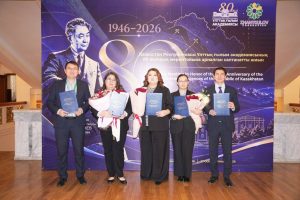
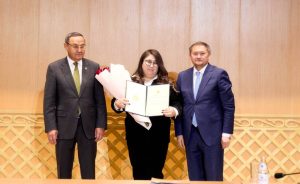
One of the significant events of the Session was the election of new full members (academicians) and corresponding members of the Kazakh Academy of Agricultural Sciences.

Following the vote, the following employees of the LLP “Research and Production Center of Fisheries” were elected as corresponding members of KAAS:

Tynysbek Temirkhanovich Barakbayev — Deputy Director General for Innovation and Production Activities of the LLP “Research and Production Center of Fisheries”;

Zamira Turarovna Bolatbekova — Chief Scientific Secretary of the LLP “Research and Production Center of Fisheries”.

Election to the membership of the Kazakh Academy of Agricultural Sciences represents significant recognition of the scientific and professional achievements of these specialists and their contribution to the development of national agricultural science and fisheries.

For the LLP “Research and Production Center of Fisheries”, this event is of particular importance. The election of two representatives of the Center as corresponding members of KAAS demonstrates the high level of the Center’s scientific potential and the professional recognition of specialists working in the fields of research, conservation and sustainable use of aquatic biological resources, and aquaculture.

Today, agricultural science in Kazakhstan faces large-scale challenges, including improving the effectiveness of scientific support for the country’s agro-industrial sectors, enhancing mechanisms for financing and evaluating scientific results, training a new generation of researchers, and introducing scientific developments into practice. Fisheries science is an important part of this process, providing scientific support for biodiversity conservation, sustainable use of aquatic biological resources, and the development of fisheries and aquaculture in Kazakhstan.

The LLP “Research and Production Center of Fisheries” sincerely congratulates Tynysbek Temirkhanovich Barakbayev and Zamira Turarovna Bolatbekova on their election as corresponding members of the Kazakh Academy of Agricultural Sciences!

We wish the newly elected corresponding members continued scientific success, the successful implementation of significant research projects, new professional achievements, and a meaningful contribution to the development of science, fisheries, and aquaculture in the Republic of Kazakhstan.
Kazakhstan’s Participation in the IX International Fisheries Forum

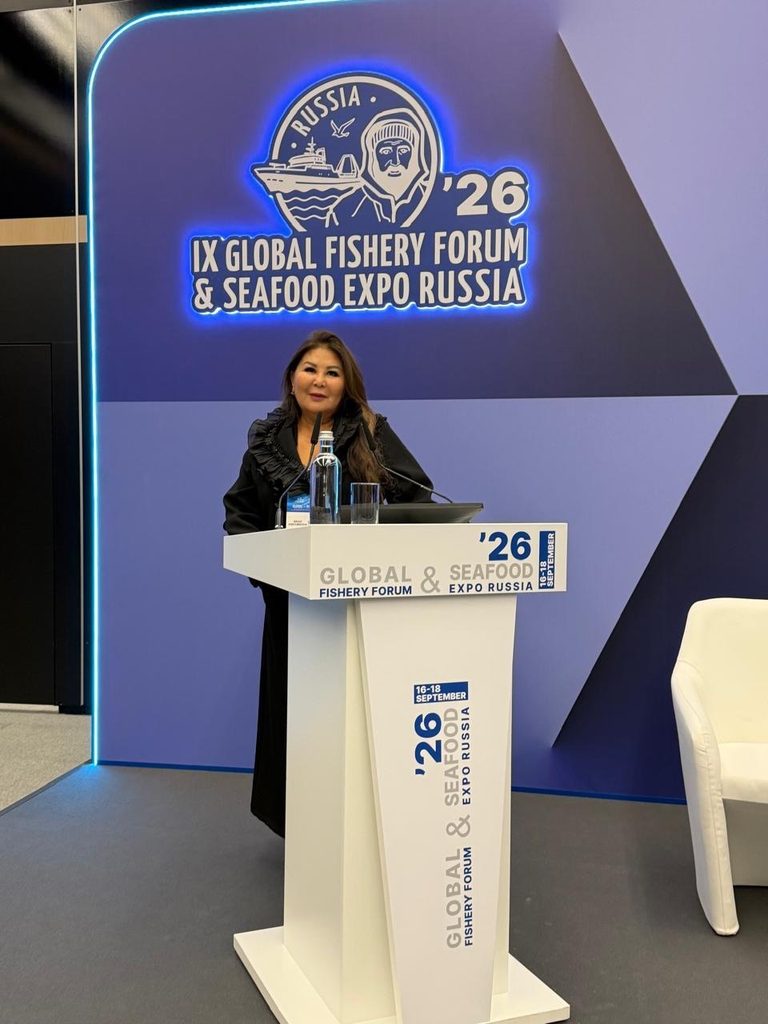
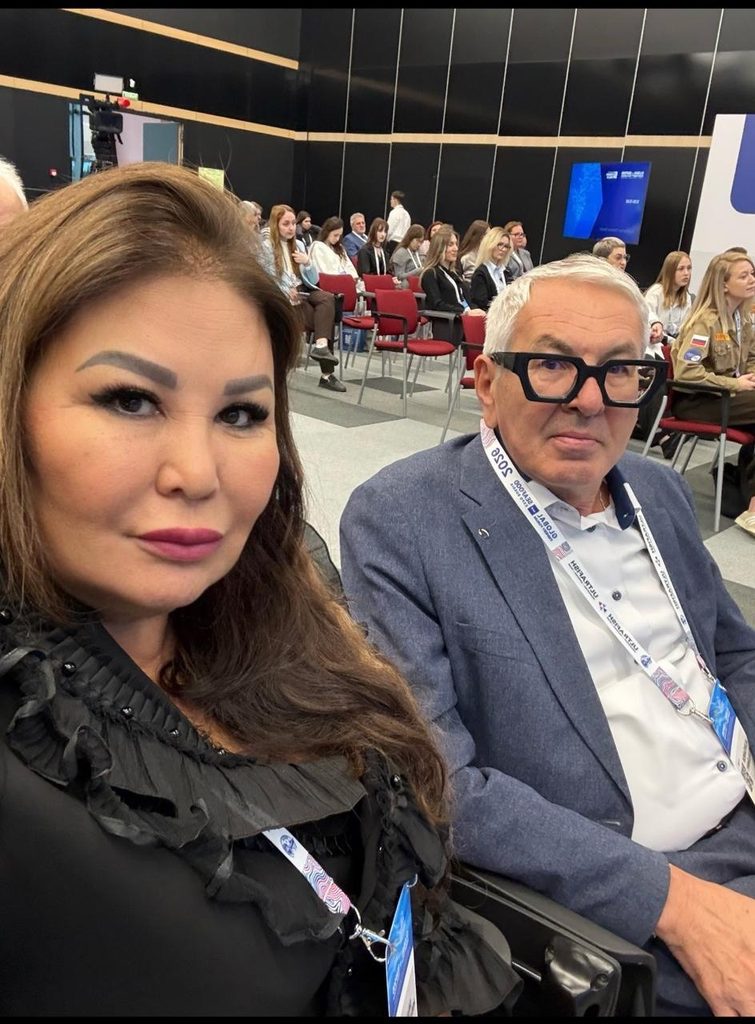
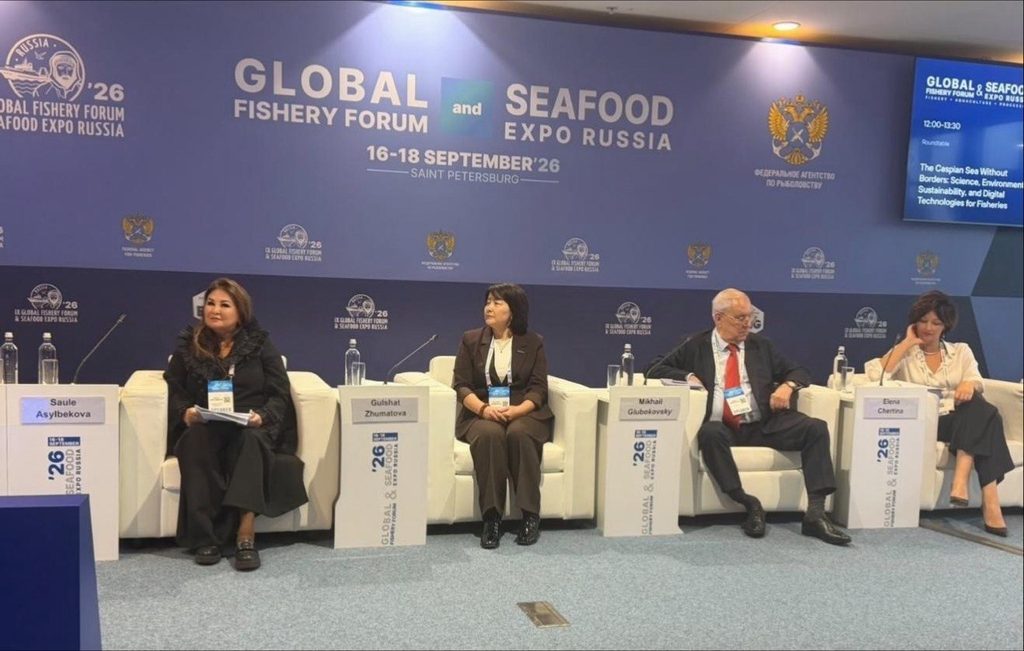
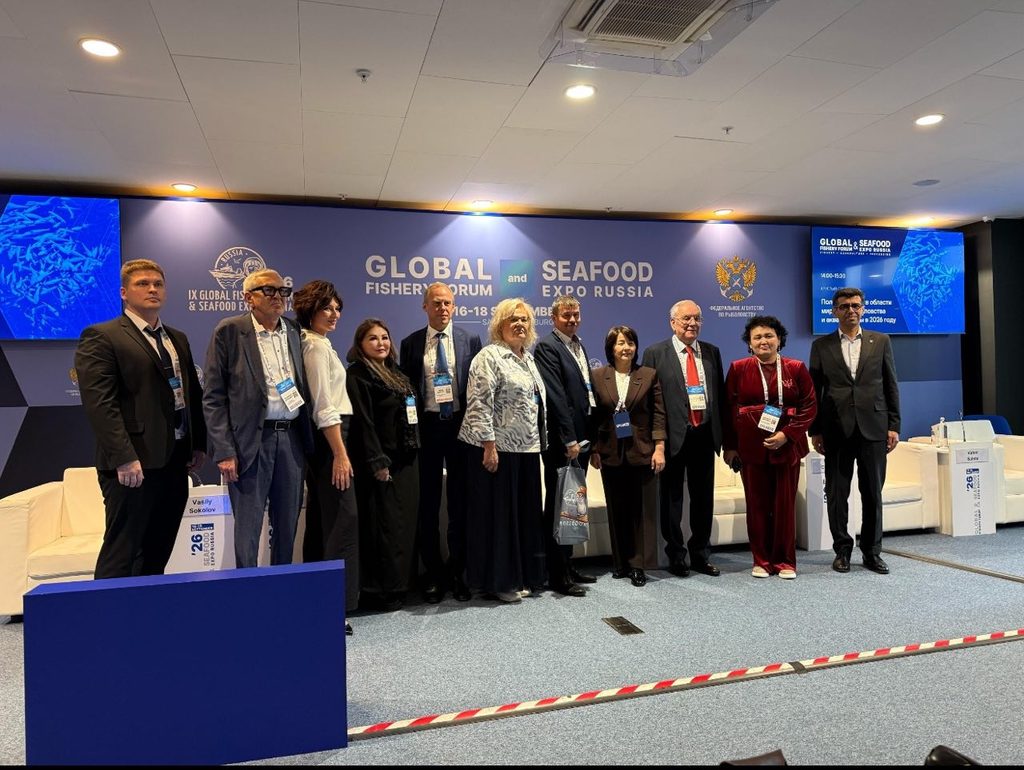
From September 16 to 18, 2026, the IX International Fisheries Forum and the Global Fishery Forum & Seafood Expo Russia 2026 Exhibition of the Fishing Industry, Seafood and Technologies are being held in St. Petersburg.

At the invitation of the forum organizers — the Federal Agency for Fishery, with the support of the Ministry of Agriculture of the Russian Federation — the Republic of Kazakhstan was represented at the event by S. Zh. Assylbekova, First Deputy Director General of the LLP “Research and Production Center of Fisheries”, Doctor of Biological Sciences, Professor, Academician of KAAN.

As part of the forum’s business program, S. Zh. Assylbekova participated as a speaker in the thematic session “Caspian Without Borders: Science, Ecology and Digital Technologies in the Interests of the Fisheries Sector.” In her presentation, she highlighted the scientific potential of the Republic of Kazakhstan and outlined key approaches to the conservation, restoration and sustainable use of aquatic biological resources of the Caspian Sea.

The round table addressed current issues related to the environmental condition of the Caspian Sea, the conservation of aquatic biological resources, the development of international scientific cooperation, and the introduction of digital technologies.

Particular attention was paid to anthropogenic pressure on the Caspian ecosystem, the application of artificial intelligence in environmental monitoring, the development of cross-border cooperation, personnel training, and the development of common approaches to the sustainable use of natural resources.

The participation of the Republic of Kazakhstan in the international forum contributes to strengthening scientific and professional cooperation with the Caspian littoral states, developing international collaboration, and establishing joint approaches to the conservation of the Caspian Sea ecosystem and the sustainable development of the region’s fisheries sector.

Kamila Adyrbekova’s scientific internship under the «Bolashak» program

Kamila Adyrbekova, Ph.D., Head of the Laboratory of Hydrobionts Genetics at the Fisheries Research and Production Center, successfully completed a one-year research internship under the Bolashak “500 Scientists” Program at the University of Illinois Urbana-Champaign (USA).

From September 1, 2025, to August 31, 2026, she undertook her internship as a Visiting Research Scholar in the Collaborative Conservation Genomics Laboratory at the Illinois Natural History Survey.

The research conducted during the internship focused on environmental DNA (eDNA) for biodiversity monitoring, with particular emphasis on aquatic invasive species, as well as the use of bioinformatics for processing and analyzing next-generation sequencing (NGS) and community metabarcoding data.

One of the main areas of research was eDNA monitoring of invasive carp species, including Silver Carp (Hypophthalmichthys molitrix), Bighead Carp (Hypophthalmichthys nobilis), Grass Carp (Ctenopharyngodon idella), and Black Carp (Mylopharyngodon piceus).

Environmental DNA (eDNA) refers to genetic material from organisms that is present in the environment. The analysis of eDNA is a modern approach to studying aquatic ecosystems that enables the detection of species and biodiversity monitoring, including the detection of invasive species.

During the internship, Kamila Adyrbekova also presented the results of her dissertation research in fish population genetics to the research group.

The one-year internship provided practical experience with modern research methods in the field of molecular genetics of aquatic ecosystems. The experience gained may contribute to future research on biodiversity and genetic monitoring of aquatic ecosystems in Kazakhstan.

Scientific research works on reservoirs of Zhambyl region

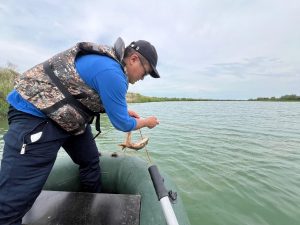
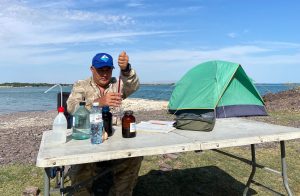
From August 24, 2026 to the present, employees of Scientific and Production Center of Fisheries LLP – head of the expedition team Bakkozha Zh.M., junior researcher Onegen S.A., researcher Bekturov D.S. and driver Sakharin N.H. — within the framework of programs 021 (subprogram 100) and 267 (subprogram 101) They carry out comprehensive scientific and research work on reservoirs of local importance in the Zhambyl region.

The purpose of the research is to assess the current state of fishing resources, the distribution of fish and other aquatic biological resources across the water areas of local reservoirs in the Zhambyl region, as well as to study the dynamics of the biological diversity of rivers in the Shu-Talas basin, followed by the development of measures for its conservation and rational use.

Currently, the expedition team is conducting comprehensive hydrochemical, hydrobiological and ichthyological studies, including the study of the physical, geographical and hydrological features of reservoirs, analysis of the hydrochemical regime of water, assessment of the condition of

To date, 16 hydrochemical and 16 hydrobiological samples have been taken during the expedition work. Within the framework of hydrobiological studies, 8 zooplankton samples, 8 zoobenthos samples, 8 samples for biogenic composition and 8 samples for salt composition of water were collected, a total of 32 samples.

As part of the ichthyological research, a biological analysis of 164 fish specimens was carried out, including the determination of the species and the main biological indicators.


Scientific research works are carried out in the Balkhash branch

Within the framework of the scientific and technical program “Development and implementation of innovative technologies and new aquaculture facilities that are economically effective in the natural and climatic conditions of various regions of Kazakhstan”, under the project “Testing and implementation of effective biotechnical methods for growing promising aquaculture products in fish farms in Kazakhstan with their genetic identification using DNA markers” Research on tench domestication is being conducted for the first time at the fishery site in the Balkhash branch of NPC Fisheries LLP, caught from natural reservoirs of the Republic of Kazakhstan to the conditions of aquaculture, the development of a technology for its cultivation in the basins of the UZV and adaptation to artificial feeds. Biotechnological methods for growing freshwater Rosenberg shrimp using water from the water supply system are being developed in the USV for crustaceans.

In the period from August 25 to 29, all the research objects in the project were bonitized: freshwater shrimp Rosenberg and tench contained in the USV. The shrimp is divided into 3 groups and is kept in square pools with a volume of 1 m3 in a crustacean reservoir; the average weight of shrimp by group is 102.2 g, 94.8 g and 82.4 g, respectively. Aller perfopma feed is used for feeding shrimps, the daily feeding ration is 3%. The tench contained in the UZV is divided into 4 dimensional groups and planted in circular pools with a volume of 2.5 m3 No. 1, No. 2, No. 4 and No. 6. Measurements were taken from all individuals of tench for statistical analysis. The average weight of tench in the basins was No. 1- 758 g, No. 2-574 g, No. 4-326 g, No. 6-278 g. Carp feed “Aller Classic” is used for feeding tench, the daily ration is 1.8%.

During the specified period, the monitoring of hydrochemical indicators of water in the USV systems was carried out. The values of the main water parameters in the ULTRASOUND in shrimp and tench were within optimal limits: temperature 230C -240C; oxygen content was 6.1 mg/l -9.2 mg/l; pH 8.2 -8.6 units, respectively.

The work was attended by the head of the program, First Deputy General Director Asylbekova S.Zh., senior researcher at the Laboratory of aquaculture Badryzlova N.S. and head of the integrated fisheries laboratory Altaeva F.A.

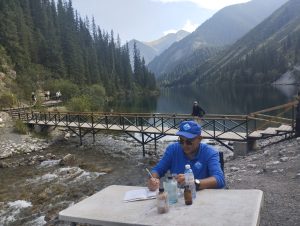
Scientific research work continues on the Kolsai Lakes

Employees of LLP “Fisheries Research and Production Center”, in accordance with Order No. 66-K dated 08/17/2026, carry out comprehensive research work on the Lower and Middle Kolsai Lakes.

Business trip period: August 18-23, 2026.

The expedition group includes employees of the laboratory of ichthyology and hydroanalytics:

  • Bakkozha Zh.M. — head of the expedition team;
  • Ablaisanova G.M. — Senior Researcher;
  • Utegen S.A. — Junior Researcher;
  • Bekturov D.S. — Researcher;
  • Sakharin N.K. — the driver.

During the research, ichthyological, hydrobiological and hydrochemical materials are collected, the state of the aquatic ecosystem and the current state of fish resources are assessed.

An important component of the expedition is the study of the hydrochemical state of the aquatic environment. Water samples are taken at various points in reservoirs and the necessary materials are collected to determine the basic physico-chemical parameters.

The study of hydrochemical parameters makes it possible to assess the water quality and the state of the habitat of fish and other aquatic organisms. The data obtained, combined with the results of ichthyological and hydrobiological studies, serve as the basis for a comprehensive assessment of the aquatic ecosystem of the Kolsai Lakes.

Scientific research is carried out within the framework of the 021 program and is aimed at assessing the state of fish stocks, determining fish productivity, as well as developing scientific justifications for the protection and rational use of aquatic biological resources.

Comprehensive summer research work at the Kapshagai reservoir and the Ile River

From July 16 to the present, employees of NPTS RH LLP (head of the expeditionary unit – Makambetov S.Zh., acting head of exped. Bakkozha Zh.M., researcher – Bekturov D.E., junior researcher – Utegen S.A.) within the framework of budget program 021 (subprogram 100) and program 267 of the PCF, summer complex scientific research works are carried out at the Kapshagai reservoir and the Ile River.

The purpose of the work is to collect ichthyological, hydrobiological and hydrological data on monitoring points.

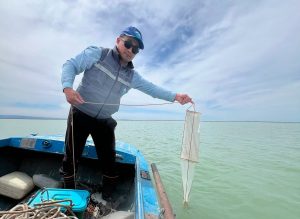
During the business trip, comprehensive scientific and research work is carried out on monitoring points, including the collection of ichthyological, hydrobiological and hydrochemical materials and samples, as well as conducting sonar surveys.

The chief specialist of the Kapshagai Fish Inspection Department of the Balkhash–Alakol Inter-regional Basin Fisheries Inspection (BAMBIRH) participates in the period of scientific research at the Kapshagai reservoir Sovetkhan S.S.

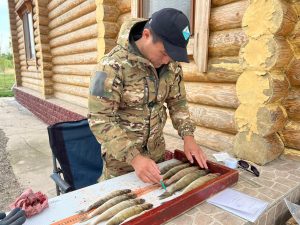
During the research period at the 9th station of the Kapshagai reservoir (coordinates: latitude 43°56’25.75″S, longitude 77°21’50.14″C) one specimen of the common perch was recorded with a body length of L – 23.3 cm, l – 20.3 cm and a weight of 202 g. This species is alien to the Balkhash-Alakol basin. Its appearance is probably due to the uncontrolled development of aquaculture.

The river or common perch Perca fluviatilis Linnaeus, 1758, lives everywhere, with the exception of the Balkhash-Alakol basin, where it is replaced by another species, the Talas River and the Syr Darya basin within the Shymkent region.

  • Tuvodnaya pisces. It reaches puberty at the age of 1-3 years.
  • It spawns in spring at a water temperature of 7-15 ° C. A phytophile.
  • It lays eggs on plants in “garlands”, but sometimes also on the ground. Fertility – up to 900 thousand. Eggs.
  • The food is mixed: zoobenthos and juvenile fish, including their own.
  • Cannibalism is especially evident where there are no other fish. Commercial type

Summer research work on the Alakol lake system

From July 16, 2026 to the present, employees of Scientific and Production Center of Fisheries LLP: head of the expeditionary detachment – S. Karlybayuly, scientific staff – B.S. Pangereev, R. Igilik, L.A. Zhdanko and laboratory assistant – N.B. Abishev. within the framework of program 021 (subprogram 100) and 267 PCF, they carry out summer complex scientific research works on reservoirs of the Alakolsky system of lakes (ASO).

  • During the business trip, comprehensive scientific and research work is carried out on monitoring points, including the collection of ichthyological, hydrobiological and hydrochemical materials and samples, as well as conducting sonar surveys.
  • During the period of scientific research in the reservoirs of the Alakol lake system (Alakol, Koshkarkol, Sasykkol), the chief specialist of the department of the Alakol fish inspection of Balkhash–Alakol inter-regional basin inspection of fisheries (BAMBIRH) Zhumagulov A.U. participates.
  • Comprehensive research work will continue until August 2026.

During the research of the Alakol lake system (ASO) in the Katynsu River, 7 specimens of representatives of the genus Misgurnus were caught with the help of a juvenile travois. The body length (L) of the caught fish was 75.5–111.2 mm, body weight – 1.25–6.45 g. Representatives of the genus Misgurnus are alien (introduced) to this region and have not been previously observed in studies of the Alakol lake system.

The genus Misgurnus belongs to the Cobitidae family of the Cypriniformes order. Representatives of the genus are bottom-dwelling freshwater fish with an elongated cylindrical body and ten antennae around the mouth, which serve as organs of touch when searching for food. They live in rivers, lakes, ponds and other bodies of water with soft muddy soil, feed on benthic invertebrates and insect larvae. Representatives of the genus are highly resistant to lack of oxygen, capable of swallowing atmospheric air and burrowing into silt under adverse conditions. The natural range of the genus covers East Asia, but individual members of the genus have been introduced to various regions of the world.

The discovery of representatives of the genus Misgurnus in the Katynsu River indicates that their appearance may be related to both natural settlement from neighboring watercourses of the Lake Alakol basin and anthropogenic introduction, and requires further monitoring.

Page 1 of 40
1 2 3 … 40